

Box trucks and Class 4-6 work trucks wear differently in South Florida. What fails first, what Florida law requires, and how to plan maintenance.
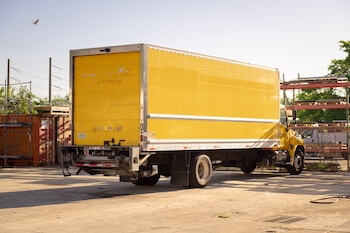
Medium-Duty Truck Repair in Broward County: What Wears Out First and How to Stay Ahead of It
If your business runs box trucks, stake beds or service-body trucks around Broward County, they are probably medium-duty trucks. They wear out differently from pickups and from 18-wheelers. Short trips, constant stops, a liftgate cycling all day and South Florida heat put steady stress on brakes, A/C, cooling and the box itself.
This guide covers what counts as medium-duty, what Florida law actually requires for these trucks, the parts that fail first on local routes, and how to plan maintenance so a down truck doesn't leave a paid crew waiting. NH Repairs is an independent truck shop in Pompano Beach that works on medium-duty trucks for businesses across Broward County.
What counts as a medium-duty truck?
Trucks are classed by gross vehicle weight rating (GVWR), the maximum loaded weight the manufacturer rates the truck for. You'll find it on the label on the driver's door edge or door jamb. The Federal Highway Administration groups Classes 3 through 6 as medium-duty; most people in the truck business mean Classes 4 to 6.
- Class 4 (14,001–16,000 lbs): larger box trucks, city delivery trucks and walk-in vans
- Class 5 (16,001–19,500 lbs): the largest city delivery trucks and bucket trucks
- Class 6 (19,501–26,000 lbs): single-axle box and straight trucks, stake-bed and beverage trucks, and school buses
Anything at 26,001 lbs or more is Class 7 or 8, which is heavy-duty. That 26,001-lb line matters for another reason: below it, drivers generally don't need a commercial driver's license (CDL), which is why so many local businesses choose medium-duty trucks.
On Broward roads you'll see a lot of Isuzu, Hino, Freightliner and International medium-duty trucks. NH Repairs works on these makes as an independent shop. We are not a dealer or a factory-authorized service center. (CONFIRM makes)
Does your box truck need an annual DOT inspection in Florida?
Maybe not, and many owners don't know that. Under Florida Statute 316.302(2)(f), a commercial truck under 26,001 lbs that runs only inside Florida and doesn't haul placarded hazardous materials is exempt from most federal motor carrier rules, including the federal annual inspection.
That doesn't mean anything goes. The same law still requires these trucks to follow:
- 49 CFR Part 393: brakes, lights, tires, wipers and other required parts must meet federal safety standards.
- 49 CFR 396.3(a)(1): parts and accessories must be in safe and proper condition at all times.
- 49 CFR 396.9: the truck can be stopped for a roadside inspection and placed out of service until defects are fixed.
So even when the annual inspection is optional, a yearly DOT inspection is still the simplest way to show your trucks are in safe condition and to catch problems before an officer does. If a truck crosses state lines or carries goods that are part of an interstate shipment, the federal rules, including the annual inspection under 49 CFR 396.17, can apply.
Not sure which rules cover your trucks? Ask us, or check with the Florida Department of Highway Safety and Motor Vehicles. This is general information, not legal advice.
What wears out first on Broward routes
Medium-duty trucks in local service rarely fail from high mileage. They fail from how they're driven: short hops, frequent stops, long idles and heat.
Brakes. Stop-and-go driving on Sample Road, Atlantic Boulevard, US-1 and the I-95 ramps wears pads, shoes, rotors and drums faster than highway miles do. Brakes are also the top reason trucks get pulled off the road. During the Commercial Vehicle Safety Alliance's 2025 Brake Safety Week, 15.1% of inspected vehicles were placed out of service for brake problems. Get brakes checked at every PM, not only when they squeal. See our brake repair service.
A/C and cooling. At low speeds, less air moves through the radiator and condenser, so the cooling system and A/C work hardest in exactly the conditions local trucks run in. Clogged radiator fins, tired fan clutches, cracked hoses and weak A/C compressors show up most in summer. A/C and cooling work is a steady part of what our shop does. See A/C repair and cooling system repair.
Exhaust aftertreatment (DPF and DEF). Short trips and long idles keep the exhaust from getting hot enough for the diesel particulate filter to clean itself. The result is more forced regenerations, warning lights and power derates. Ask your shop to check soot load, regeneration history and DEF quality. See DPF and EGR service.
Liftgates and hydraulics. A delivery liftgate can cycle dozens of times a day. Watch for a gate that lifts slowly, drifts down under load, leaks fluid or drains the battery. The usual culprits are cylinders and seals, motors, valve bodies, controls and bent platforms.
The box. Forklifts and pallet jacks damage floors and door tracks, and summer rain finds every gap in a roof or panel. Roofs, floors, roll-up doors and panels are easier to fix early than after water damages the cargo. Body and box repair is one of the largest parts of our work. See welding and fabrication.
Electrical. Humidity, salt air near the coast and extra load from liftgates and lights wear on batteries, grounds and connectors. Corroded connections often look like random faults.
A simple PM checklist for medium-duty trucks
Start from the manufacturer's schedule. Most manufacturers publish a separate severe-service schedule for trucks that idle a lot, make frequent stops or run short trips, which describes most local work. Track engine hours as well as miles, because idle time wears the engine without adding miles.
- Brakes: Check pads or shoes, rotors or drums, fluid or air lines, and ABS faults. Stop-and-go traffic wears them fast, and brakes are the top reason trucks are placed out of service at roadside inspections.
- Cooling: Check coolant condition, radiator and condenser fins, the fan, belts and hoses. Heat plus low-speed driving makes this system work hardest.
- A/C: Check the refrigerant charge, compressor and cabin filter. Drivers need working A/C to stay comfortable and safe in summer.
- Aftertreatment: Check soot load, regeneration history, DEF quality and sensor codes. Short trips and idling keep the DPF from cleaning itself.
- Liftgate: Check cylinders, seals, hoses, controls, the platform and battery charge. A delivery liftgate can cycle dozens of times a day.
- Box and doors: Check roof seams, the floor, roll-up door tracks and springs, and panels. Rain, humidity and loading wear them down.
- Tires and lights: Check tread, pressure and sidewalls, and test every lamp and reflector. Heat and road debris wear tires, and a burned-out light is an easy roadside violation.
Before hurricane season (June 1 to November 30), give every truck a quick check of tires, batteries, wipers, lights and fuel so it's ready for storm prep and cleanup work. For a fleet, a fleet maintenance program puts all of this on a calendar.
How NH Repairs works with medium-duty fleets in Broward County
Our shop is at 2221 NW 22nd St in Pompano Beach, near Copans Road and Powerline Road, minutes from I-95, the Turnpike, Sample Road and US-1. We work with businesses across Broward County, including Pompano Beach, Deerfield Beach, Coconut Creek, Margate, Coral Springs (about 8 miles away), Tamarac, Oakland Park and Fort Lauderdale, and with fleets in nearby Miami-Dade and Palm Beach counties.
- Planned maintenance scheduled around your routes, not ours.
- Selected repairs at your yard where location, safe access, equipment and parts allow; heavier work is scheduled into the shop with the diagnosis already done. (CONFIRM wording)
- A written estimate you approve before any work starts.
- Diagnostics with JPRO, Autel and manufacturer software as each truck requires.
- Service records for every unit, with reminders when PMs and inspections come due. (CONFIRM reminders are live)
- An independent shop, not a dealer. Tell us the make and the job, and we'll tell you whether it belongs in our shop or a dealer's.
Running box trucks or work trucks in Broward? Call 954-982-6710 or send a service request to set up planned maintenance or book a repair. (Optional: current offer, only as approved by Adan.)
Frequently asked questions
Is a box truck medium-duty or heavy-duty? It depends on the GVWR on the door label. From 14,001 to 26,000 lbs (Classes 4 to 6) is medium-duty; 26,001 lbs and up is heavy-duty. Most local box trucks fall in the medium-duty range.
Does my box truck need an annual DOT inspection in Florida? If it's under 26,001 lbs, stays in Florida and doesn't carry placarded hazardous materials, Florida law exempts it from the federal annual inspection. It must still be kept in safe condition and can be inspected roadside. Trucks in interstate commerce follow federal rules. Many fleets inspect every truck yearly anyway.
How often should a medium-duty truck get preventive maintenance? Use the manufacturer's severe-service schedule if your trucks do local stop-and-go work, and track engine hours as well as miles. We can set a schedule for each unit based on how it's used.
Can you repair liftgates at our location? Often, yes, when the location, safe access, equipment and parts allow. Bigger jobs come into our Pompano Beach shop.
Are you a dealer? No. NH Repairs is an independent shop. We work on medium-duty trucks from several makers, and we'll tell you when a job, such as warranty work, belongs at a dealer.
Sources
- Florida Statutes 316.302 (2026) – the under-26,001-lb intrastate exemption and the rules that still apply
- Alternative Fuels Data Center – vehicle weight classes – FHWA Classes 1 to 8 by GVWR
- Hedges & Company – GVWR classes – typical trucks in each class
- Allegiance Trucks – medium vs heavy duty – CDL threshold at 26,001 lbs
- J. J. Keller – 2025 Brake Safety Week results – 15.1% out of service for brakes
- ProDriver – CVSA 2025 Brake Safety Week insights – brakes are the most-cited out-of-service issue at roadside inspections
- NH Repairs Stage 1 Market Research & SEO Brief (internal, Oct 2, 2026) – shop location, services, claims rules
News & Articles
Here, you'll find regular articles covering a wide range of topics related to diesel repair, maintenance, and troubleshooting.