Fleet Maintenance for Doral Logistics Companies: A Practical Guide
Doral isn't a typical South Florida suburb. It's one of the most logistics-dense zip codes in the entire state -- a corridor of distribution centers, freight forwarders, bonded warehouses, and last-mile operators sandwiched between Miami International Airport and the western edge of Miami-Dade. If your fleet works in or through Doral, your trucks are working hard, in heat, on tight schedules, with dispatch pressure that doesn't leave much room for unplanned downtime.
Fleet maintenance in this environment isn't about following a generic PM calendar. It's about understanding what the operating conditions actually do to equipment and building a maintenance program that accounts for it.
What Doral's Operating Conditions Do to Commercial Trucks
The duty cycle most Doral fleets run is one of the harder ones for commercial equipment. Short routes, constant starts and stops, frequent dock staging, and extended idling at the airport and warehouse facilities add up to conditions that accelerate wear in ways that long-haul duty cycles don't.
Aftertreatment systems take the hit first. DPF filters clog faster on trucks that never get up to highway speeds long enough to complete an active regen cycle. Fleets running MIA cargo routes, NW 87th Avenue, and the 836 interchange are exactly the operations that end up with trucks throwing regen warnings ahead of schedule. A PM program that doesn't include proactive DPF service intervals -- not reactive ones triggered by warning lights -- will spend more on repairs than it needs to.
Engine oil degrades faster in stop-and-go conditions. High idle time and frequent cold starts keep combustion temperatures inconsistent, which shortens oil service life. OEM mileage intervals are calibrated for mixed-use operation. Trucks running tight urban loops in South Florida heat often need shorter intervals to maintain the same level of protection.
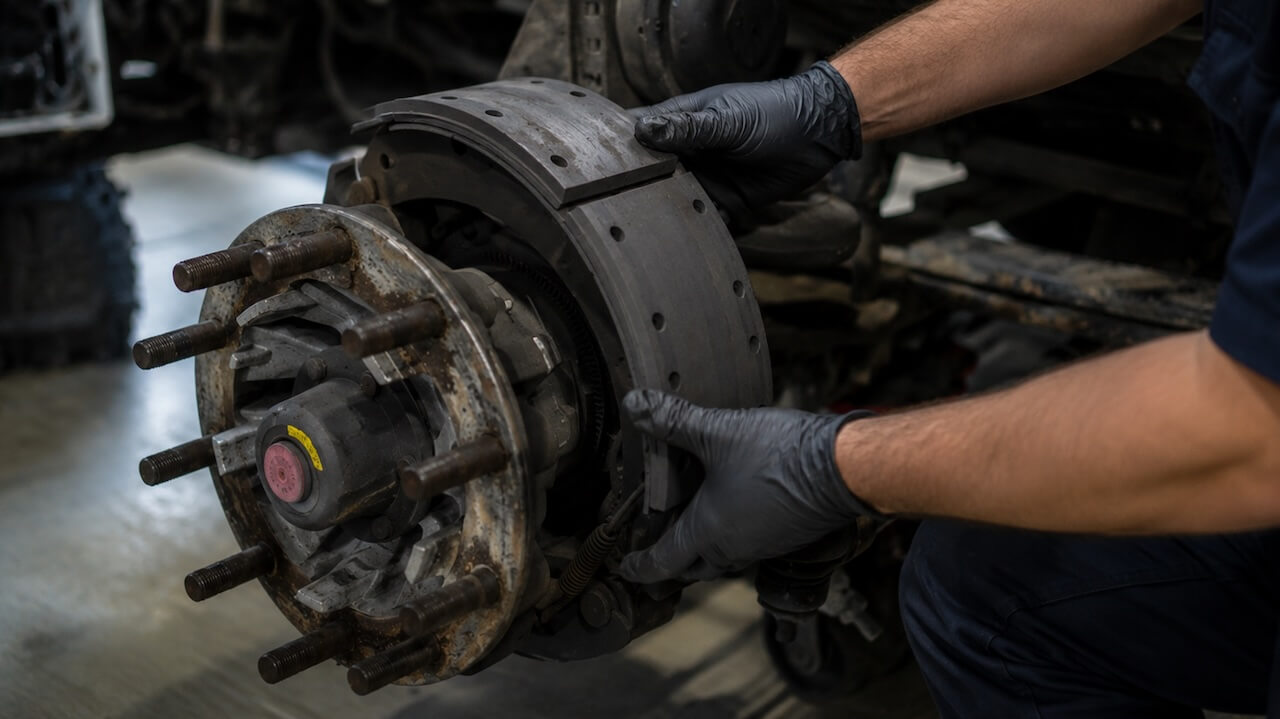
Brakes wear unevenly and faster. Frequent stops at grade crossings, loading dock approaches, and traffic lights on the Doral grid mean brake systems on last-mile and drayage trucks see more cycles per mile than highway equipment. Brake adjustment, lining wear, and air line condition need to be on a tighter inspection schedule.
The Problem with Reactive Maintenance in a High-Volume Corridor
Most fleet operators understand the argument for preventive maintenance in theory. In practice, the pressure to keep trucks moving in a place like Doral makes it easy to defer service until something actually fails. That calculus tends to work fine -- until it doesn't.
A truck that goes down at a warehouse loading dock during a peak freight window doesn't just cost a repair bill. It costs the load, the driver's hours, a potential chargeback from the customer, and the downstream schedule disruption if the unit is needed for a second run. At typical South Florida drayage rates, an unplanned out-of-service event at the wrong time can cost more than three or four PM visits.
The other problem with reactive maintenance in a dense logistics corridor is tow access. Getting a disabled Class 8 tractor out of a Doral industrial park during peak hours is not a fast process. Mobile repair is often a faster and cheaper path to getting back in service -- but only if you have a repair relationship already in place before something breaks.
What a Practical Fleet Maintenance Program Looks Like Here
For Doral logistics fleets specifically, here's what a solid maintenance program covers:
Mileage-based PM intervals adjusted for duty cycle. If your trucks are running urban routes, don't use highway PM intervals. Oil changes, brake inspections, and filter service should be tied to the actual conditions the equipment is running in, not a generic mileage threshold from the owner's manual.
Proactive aftertreatment service. Schedule DPF cleaning and EGR inspections at defined intervals before warning lights appear. For urban-cycle trucks, that might mean cleaning intervals 20-30% shorter than OEM guidance. The cost of a proactive cleaning is a fraction of a forced regen failure or a DPF that needs replacement.
Pre-DOT inspection checks. Florida enforcement activity is consistent along the I-75 and Palmetto corridors that feed into Doral. A quarterly or semi-annual pre-DOT walkaround with a qualified technician catches brake, lighting, and tire deficiencies before they become violations at a weigh station or roadside stop.
Mobile repair in the coverage plan. For a fleet running out of Doral, having a repair partner with mobile capability isn't optional -- it's part of the maintenance program. Breakdowns happen at docks, not just on the highway. A mobile tech who can respond to the Blue Lagoon industrial area or the NW 107th Avenue corridor without towing is a direct cost savings.
Why the Right Repair Partner Matters for Doral Operations
Doral's logistics operators tend to run lean. Owner-operators handling drayage out of MIA, mid-size fleets running warehouse distribution, freight forwarders with mixed equipment -- none of them have the margin to absorb repeated unplanned repairs or shop delays.
The repair partner that works for this environment is one that can handle diesel engine work, trailer repairs, aftertreatment service, brakes, and electrical in one place without subcontracting. Every outside vendor in the repair chain adds a day. For a fleet running daily loads, that's a real number.
NH Repairs serves commercial fleets across Miami-Dade and Broward counties from our Pompano Beach shop. Mobile repair coverage extends into Doral and the broader Miami-Dade logistics corridor. We work on Class 6-8 trucks and trailers across Freightliner, Volvo, International, Kenworth, Peterbilt, Mack, and other major makes.
If you operate a fleet in Doral and want to talk through a maintenance program that actually fits the operating conditions, call us.
Call NH Repairs at 954.982.6710 or contact us at nhrepairs.com/contact.
Frequently Asked Questions
NH Repairs provides scheduled mobile visits Monday–Friday, 7:45 AM–5:00 PM, within 40 miles of our Pompano Beach shop. Confirm the address, vehicle, work scope and timing before scheduling. We do not offer emergency roadside dispatch.
What types of trucks do you work on? Class 6-8 trucks and trailers across all major makes -- Freightliner, Volvo, International, Kenworth, Peterbilt, Mack, and others. Drayage tractors, box trucks, reefer units, flatbeds, and step-decks all fall within our scope.
How do I know if my PM intervals are right for urban duty cycles? If your trucks are primarily running urban routes with frequent stops and limited highway time, standard OEM intervals are likely too long for oil and too generous for aftertreatment service. A shop that understands duty-cycle-adjusted maintenance can help you set intervals that match what your equipment is actually doing. Call us and we can walk through it.
Can you handle both tractor and trailer repairs? Yes. We do full trailer service -- brake systems, lighting, suspension, landing gear, and structural repairs -- alongside tractor-side diesel work. One relationship, both sides of the unit.
Do you offer fleet maintenance contracts for South Florida logistics companies? Yes. We work with fleet operators on structured maintenance agreements covering scheduled PM, DOT inspections, and aftertreatment service. Contact us to discuss what makes sense for your fleet size and the routes you run.